

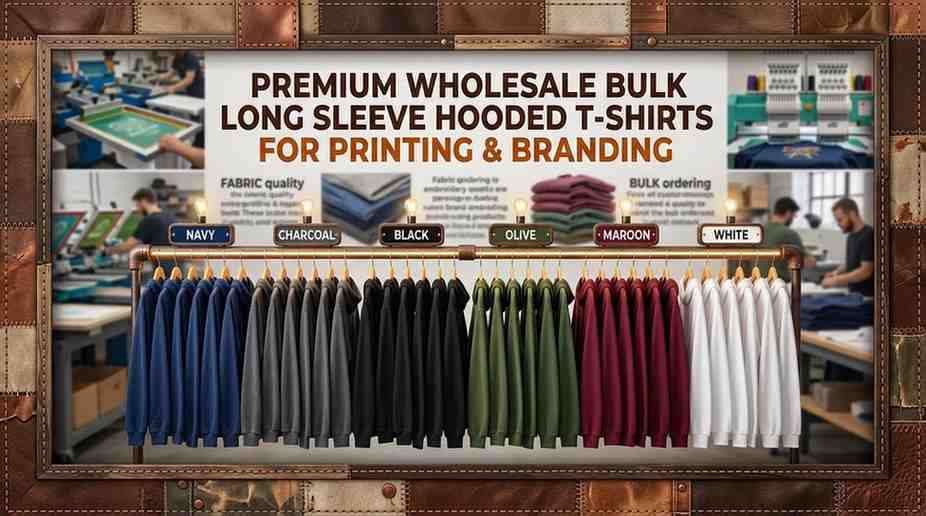
In the constantly shifting world of apparel, certain garments manage to stay relevant across seasons, trends, and demographics. The long sleeve hooded t-shirt is one of those rare pieces. It sits comfortably between a regular tee and a full hoodie, giving wearers warmth without bulk and structure without stiffness. For businesses, retailers, print shops, and clothing brands looking to expand their catalog with a versatile piece, the Bulk Long Sleeve Hooded T-Shirt has become a go-to product for printing, embroidery, and large-scale branding projects.This article breaks down everything you need to know about sourcing, customizing, and selling these garments in wholesale quantities, along with the fabric details, printing methods, sizing considerations, and quality checks that separate a premium product from an average one.
A long sleeve hooded t-shirt is a hybrid garment. It carries the lightweight, breathable feel of a standard cotton tee but adds two practical features: full-length sleeves and an attached hood. Unlike a traditional pullover hoodie, it does not include heavy fleece lining, a kangaroo pocket, or thick ribbed cuffs in most cases. This makes it lighter, more flexible, and easier to layer.
It works well in spring, autumn, and mild winter conditions. It also serves as a layering piece under jackets during colder months. Because of this adaptability, the demand for these shirts has grown significantly in streetwear, athleisure, uniform programs, and promotional merchandise.
Buying in bulk reduces the per-unit cost dramatically. When a print shop or clothing label orders hundreds or thousands of units, the savings on each piece allow for healthier profit margins or more competitive retail pricing.
Unlike heavy winter hoodies, these shirts move throughout the year. Retailers do not have to worry about long off-season storage, which improves inventory turnover.
The flat chest area, full back, and sleeves all serve as printable real estate. Whether the goal is screen printing a band logo, embroidering a corporate emblem, or adding sublimated graphics for a streetwear drop, this garment provides the surface area needed.
The fabric is where premium products separate themselves from cheap alternatives. Buyers should pay close attention to the composition before placing large orders.
Soft, breathable, and excellent for printing. It absorbs ink well, which is essential for screen printing and DTG (direct-to-garment) work. The downside is that pure cotton can shrink if not pre-shrunk during production.
A blend of around 60% cotton and 40% polyester offers a balance between softness and durability. These blends resist shrinking, hold their shape longer, and dry faster, making them ideal for active wear or uniforms.
A mix of cotton, polyester, and rayon produces a softer hand feel and a slight heather appearance. Tri-blends are popular in premium streetwear because they drape better and feel lighter on the body.
GSM (grams per square meter) determines thickness. A 180 to 220 GSM fabric is considered medium weight and works well for most climates. Anything above 240 GSM moves closer to a sweatshirt feel, while 140 to 160 GSM is more of a summer-leaning weight.
Construction Details That Matter
When inspecting a sample before placing a bulk order, several construction elements should be evaluated carefully.
Double-needle stitching at the hem, cuffs, and shoulders increases durability. Single-stitched garments tend to unravel after multiple washes.
A proper hood should hold its shape without collapsing flat against the back. Look for hoods with a clean lining and reinforced seams. Some versions include drawstrings while others use a clean, stringless design for a minimalist look.
A reinforced ribbed collar prevents stretching over time. Cheap garments often lose their neckline shape within a few washes.
Cuffs can either be ribbed or hemmed flat. Ribbed cuffs keep the sleeves in place during movement, while flat hems create a cleaner, more relaxed silhouette.
This is where wholesale buyers customize garments for their specific market.
Best suited for large orders with simple designs. It produces vibrant, long-lasting prints and is highly cost-effective when printing the same artwork on many pieces.
Ideal for detailed, colorful artwork. It works best on 100% cotton fabrics and allows for smaller print runs without setup fees.
A premium option that adds dimension and a high-end feel. Embroidery works well for logos on the chest, sleeves, or hood. It is more expensive but signals quality and durability.
Heat transfers work on most fabrics and are useful for complex designs in small batches. Sublimation, on the other hand, requires polyester-heavy fabrics but produces seamless, all-over prints.
Wholesale buyers must plan for a wide size range. A standard bulk order typically includes sizes from XS to 3XL, sometimes extending to 5XL for inclusive brands. Fit styles vary as well.
Suits most general retail and uniform programs.
Popular in streetwear and youth-focused brands. The shoulders drop slightly and the body runs wider.
Preferred for fashion-forward labels targeting a tailored look.
Providing accurate size charts is essential for reducing return rates when these garments are resold online.
The apparel industry continues to face pressure regarding environmental and labor practices. Buyers should ask suppliers about organic cotton options, recycled polyester blends, water-saving dye processes, and certifications such as OEKO-TEX or GOTS. Beyond compliance, sustainable sourcing has become a selling point for end consumers who actively check the origin of their clothing.
Several pitfalls can hurt a bulk apparel purchase. Skipping the sample stage is one of the biggest. Photos and tech packs cannot fully convey fabric weight, stitching, or fit. Another mistake is ordering only popular sizes such as M and L, which leaves smaller and larger customers without options. Finally, ignoring color consistency across production batches can lead to noticeable variations in restocks, which damages brand credibility.
The long sleeve hooded t-shirt has carved out a permanent place in modern apparel because it solves a practical problem. It bridges seasons, suits multiple aesthetics, and provides a strong base for branding. For wholesale buyers, the opportunity lies in selecting the right fabric, ensuring solid construction, choosing the appropriate printing method, and offering a fit that resonates with the target audience.
When all these factors come together, the result is a product that does not just sell, it builds repeat customers and strengthens the identity of any clothing line that puts its name on it.
Submit guest articles that reach decision-makers, influencers, and professionals. Yarabook offers a trusted platform for quality content, strong backlinks, and SEO-driven visibility. Pay. Publish. Promote.