

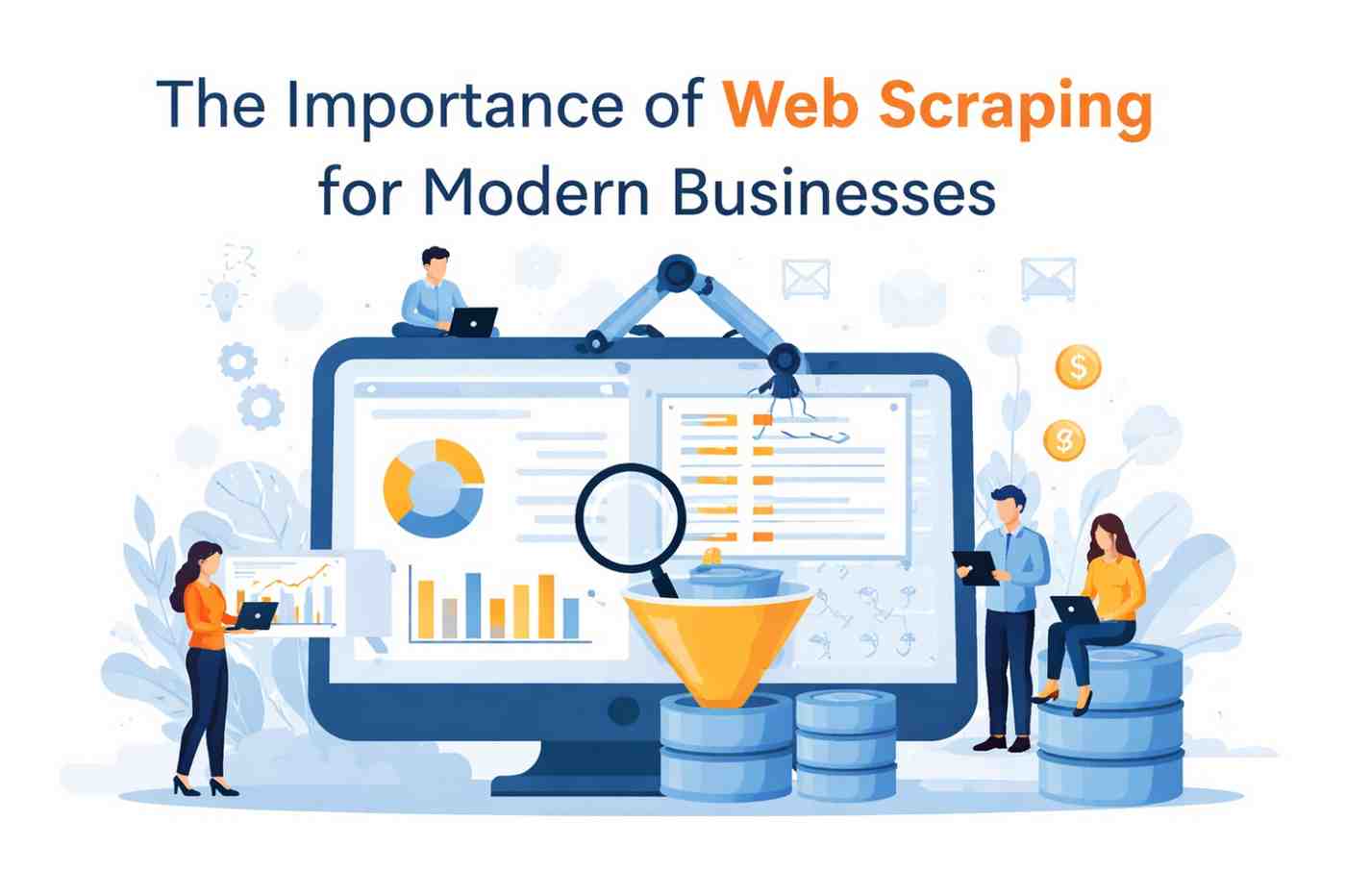
Data is everywhere overflowing dashboards, endless spreadsheets, and reports that somehow say everything and nothing at the same time. Modern businesses don’t struggle to find data; they struggle to make sense of it. That’s where web scraping quietly steps in (no cape, but definitely a hero). By extracting structured data from the web, businesses gain clarity, speed, and direction. In an economy driven by real-time insights, relying on guesswork feels outdated. Smart organizations are shifting toward automated data collection—and, unsurprisingly, seeing sharper, faster decisions as a result.
Web scraping is the process of automatically collecting data from websites and converting it into a usable format. Instead of manually copying information (a task no one misses), automated tools gather data at scale—quickly and accurately. It works by accessing web pages, extracting specific information, and organizing it for analysis. The contrast is clear: manual data collection is slow and error-prone, while automated scraping is efficient and scalable. As businesses evolve, relying on outdated methods becomes less practical—almost like using a flip phone in a smartphone world.
Modern businesses run on speed, precision, and timing. Decisions based on outdated or incomplete data often lead to missed opportunities. Web scraping enables organizations to gather real-time insights, monitor trends, and respond faster than competitors. It turns scattered online data into actionable intelligence. Partnering with a reliable web scraping company often accelerates this process, ensuring accuracy and scalability. The result? Better strategies, informed decisions, and a stronger market position. But this is just the beginning—because the real value lies in how this data is used.
Web scraping delivers multiple advantages that go beyond simple data collection. It empowers businesses to monitor competitors, understand customer behavior, and adapt pricing strategies dynamically. Lead generation becomes more targeted, while content aggregation helps track industry sentiment. Each benefit builds toward a single goal—smarter decision-making. Instead of relying on assumptions, businesses operate with evidence. And in a competitive market, that distinction matters. The ability to access and analyze relevant data consistently often separates growing companies from those merely trying to keep up.
Across industries, web scraping proves its value in practical ways. E-commerce companies track competitor pricing to stay competitive. Real estate platforms gather property listings from multiple sources. Financial firms analyze market data to identify trends. Travel websites compare fares in real time, offering better deals to users. Even SaaS companies use scraped data to refine their offerings. These examples highlight a common theme—data drives decisions. Businesses that embrace this approach gain a measurable advantage, while others risk falling behind in an increasingly data-driven world.
Web scraping is powerful, but it requires responsibility. Legal compliance, data privacy, and ethical usage are essential factors to consider. Websites may have restrictions such as robots.txt files or anti-bot measures, and ignoring these can lead to complications. Data accuracy is another challenge—raw data often needs cleaning and validation before use. Responsible scraping practices ensure long-term success. Businesses that approach this thoughtfully avoid unnecessary risks while still benefiting from valuable insights. After all, sustainable growth depends on both innovation and integrity.
Deciding how to implement web scraping depends on business needs and resources. Some organizations build in-house solutions, while others collaborate with a web scraping to save time and effort. Tools can handle basic tasks, but custom solutions offer flexibility and scalability. The right choice balances cost, efficiency, and long-term goals. Businesses aiming for rapid growth often prioritize scalable systems that adapt easily. Ultimately, the approach should align with strategic objectives—because the right setup today prevents limitations tomorrow.
There was a time when teams spent hours collecting competitor data manually—copying, pasting, double-checking (and occasionally questioning life choices). The process was slow, repetitive, and, frankly, exhausting. Then automation entered the picture, and everything changed. What once took days could now be completed in minutes. The shift wasn’t just about speed—it was about focus. Teams moved from gathering data to actually analyzing it. That small change made a big difference, proving that efficiency often starts with the right tools.
The future of web scraping is closely tied to advancements in AI and machine learning. Automation is becoming smarter, enabling deeper insights and predictive analysis. Businesses are no longer just collecting data—they are interpreting it in real time. As digital ecosystems expand, the demand for accurate and timely information will only grow. Companies that adopt these technologies early position themselves ahead of the curve. In many ways, web scraping is evolving from a tool into a strategic necessity—one that shapes how businesses compete and innovate.
Successful web scraping starts with clear objectives. Defining what data is needed ensures efficiency and relevance. Compliance with legal and ethical standards protects long-term operations. Data quality should always be a priority—clean, accurate information leads to better decisions. Scalable systems allow businesses to grow without limitations. Regular monitoring ensures processes remain effective. These practices create a strong foundation for data-driven strategies. When implemented correctly, web scraping becomes not just a tool, but a reliable part of business operations.
Data has become the backbone of modern business strategy—and those who use it effectively gain a clear advantage. Web scraping simplifies the process of collecting and analyzing information, turning complexity into clarity. Whether implemented in-house or through a trusted web scraping the impact is undeniable. Businesses that embrace this approach move faster, think smarter, and adapt better. In a world where information is power, the ability to harness it efficiently makes all the difference.
1. What is web scraping used for in business?
Web scraping is used to collect data from websites for analysis, helping businesses make informed decisions, track competitors, and identify market trends.
2. Is web scraping legal?
Web scraping is legal when done responsibly and in compliance with website terms and data protection regulations.
3. How accurate is scraped data?
Accuracy depends on the scraping method and data cleaning process. Proper validation ensures reliable results.
4. Can small businesses use web scraping?
Yes, small businesses can benefit from web scraping by gaining insights without large investments.
5. How to choose the right solution?
The right solution depends on business goals, budget, and scalability needs.
Submit guest articles that reach decision-makers, influencers, and professionals. Yarabook offers a trusted platform for quality content, strong backlinks, and SEO-driven visibility. Pay. Publish. Promote.